
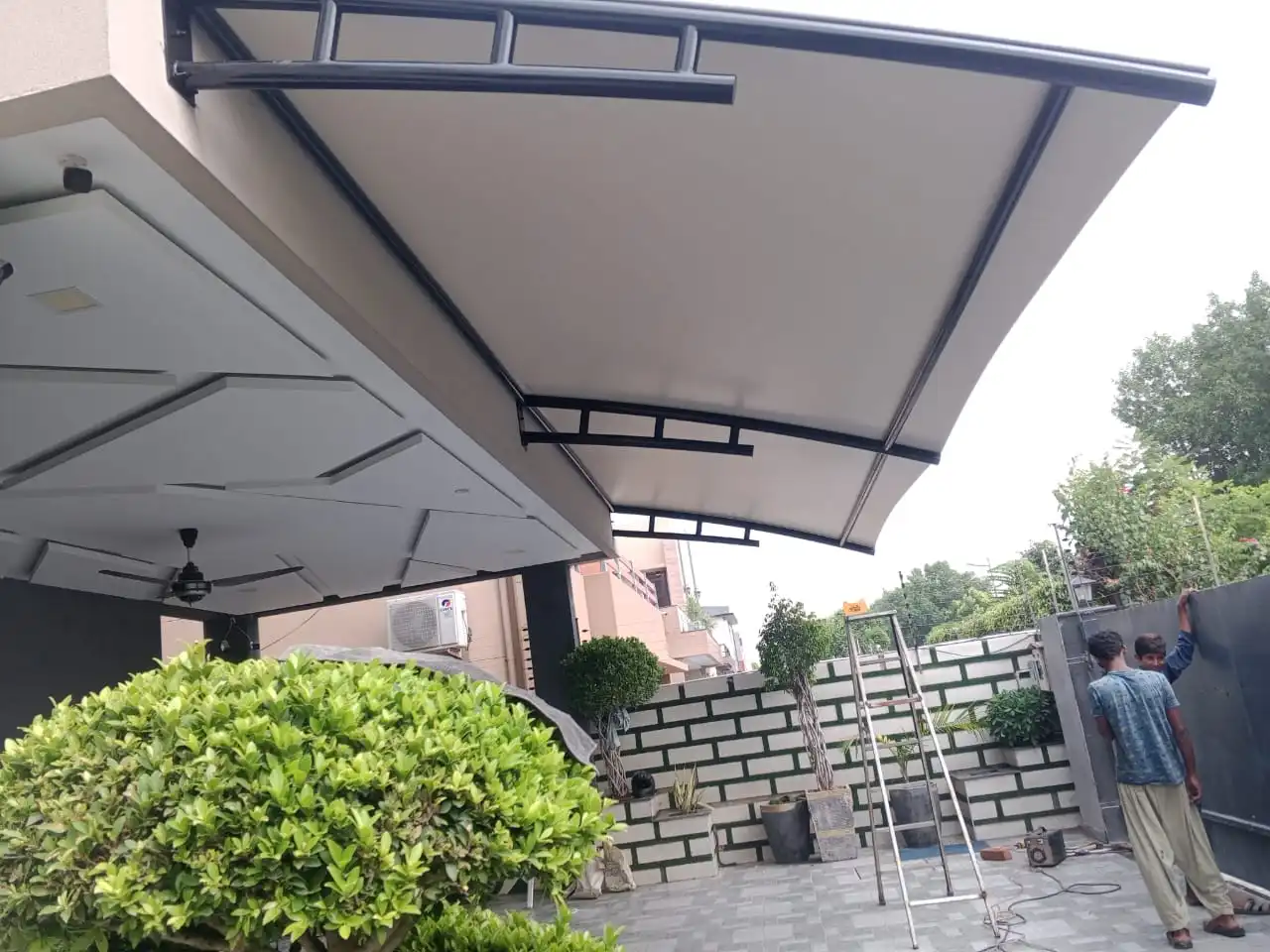
Introduction to Car Parking Shades
Why Car Parking Shades Matter
Imagine stepping into your car after it has been sitting under the blistering sun for hours. The steering wheel is scorching hot, the seatbelt could burn your skin, and the air inside feels like a furnace. That’s exactly why PVC vs HDPE parking shades are a game changer. These structures are designed to protect vehicles from harsh environmental elements like sun, rain, and even hail. They not only enhance the comfort and lifespan of your vehicle but also improve the aesthetics of the space where they’re installed
PVC vs HDPE parking shades have become a necessity in urban environments, particularly in regions with extreme weather conditions. They safeguard vehicle paint, reduce interior fading, and help maintain a lower cabin temperature. More than just a utility, these shades contribute to energy efficiency by reducing the need for air conditioning upon entering the vehicle. Whether in residential complexes, office parking lots, malls, or airports, these structures are critical for protecting one of your most significant investments—your car.
Overview: PVC vs HDPE Parking Shades for Car Protection
When it comes to choosing a material for car parking shades, two top contenders dominate the market: PVC (Polyvinyl Chloride) and HDPE (High-Density Polyethylene). The comparison of PVC vs HDPE parking shades involves evaluating their strength, cost, durability, maintenance, and suitability for different climates and applications. Some property owners are drawn to the sleek finish of PVC, while others appreciate the breathability and cost-effectiveness of HDPE.
Understanding the differences between these two materials will help you make an informed decision tailored to your specific needs. Before jumping into the detailed comparison, it’s crucial to dissect each material individually—what makes them unique, their advantages, and where they might fall short.
What is PVC (Polyvinyl Chloride)? Properties and Advantages
Key Characteristics of PVC in PVC vs HDPE Parking Shades
PVC is a synthetic plastic polymer widely used in the construction industry, including for PVC vs HDPE parking shades. It’s created through the polymerization of vinyl chloride, resulting in a highly versatile and durable material. The most notable characteristic of PVC used in parking shades is its ability to create a fully waterproof barrier. When installed properly, a PVC shade can completely block rain and sun, offering unparalleled protection.
Key PVC properties:
- High tensile strength
- 100% waterproof
- UV-resistant coating (excellent UV protection)
- Smooth and glossy finish
- Available in multiple colors and opacities
PVC fabric for shades usually comes in a multilayer structure, often including a mesh base layer sandwiched between two layers of PVC coating. This structure ensures strength and provides resistance against tears and punctures.
Advantages and Disadvantages of PVC in PVC vs HDPE Parking Shades
Advantages:
- Excellent water resistance (ideal for rain protection)
- High UV protection (blocks nearly all harmful UV rays)
- Strong and durable (withstands harsh weather and mechanical stress)
- Sleek, modern appearance (aesthetic flexibility)
- Easy to clean (low maintenance)
Disadvantages:
- Less breathable (can trap heat under the canopy)
- Higher cost (PVC price is generally more expensive than HDPE)
- Environmental impact (less eco-friendly, harder to recycle)
- Heavier weight (requires robust structural support)
PVC shines in applications where waterproofing, UV protection, and aesthetics are priorities. However, it may not be the best choice if you’re looking for a shade that promotes airflow or comes with a lower environmental footprint.
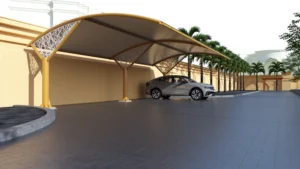
What is HDPE (High-Density Polyethylene)? Properties and Advantages
Core Properties of HDPE in PVC vs HDPE Parking Shades
HDPE is a thermoplastic polymer made from petroleum. Unlike PVC, HDPE is known for its mesh-like texture that allows some sunlight and air to pass through. This makes HDPE a breathable material—a major selling point in areas with extreme heat. While it doesn’t provide 100% waterproofing, it offers superior ventilation and is less likely to trap heat under the canopy.
Key HDPE properties:
- High UV resistance (blocks 85–98% of UV rays)
- Breathable, porous design (excellent for heat resistance)
- Lightweight and flexible (easy installation)
- Excellent tensile strength
- Good chemical resistance
HDPE is often treated with UV stabilizers to prevent degradation in the sun. It typically blocks about 85–98% of harmful UV rays while still allowing natural light to filter through.
Pros and Cons of HDPE in PVC vs HDPE Parking Shades
Pros:
- Breathability (allows air circulation, reducing heat buildup)
- Lightweight (easier and cheaper to install)
- Cost-effective (HDPE price is more affordable than PVC)
- Environmentally friendly (recyclable, often made from post-consumer materials)
- Long lifespan (8–12 years with UV protection)
Cons:
- Not waterproof (limited rain protection)
- Less aesthetic flexibility (mesh texture may not appeal to all tastes)
- Susceptible to dust accumulation (requires more frequent cleaning)
- Can sag over time (improper installation or prolonged exposure)
HDPE is ideal for hot, dry climates like Saudi Arabia, where breathability, energy efficiency, and budget-friendliness are priorities.
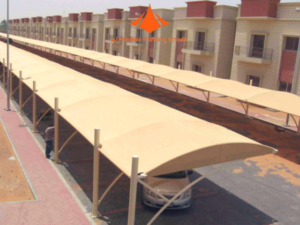
If you want to explore more about the advantages, installation, and pricing of PVC vs HDPE parking shades, check out our comprehensive resources at Al Madina Parking Shade.
Durability, Strength, and Lifespan: PVC vs HDPE Parking Shades
Weather Resistance and UV Protection in PVC vs HDPE Parking Shades
When comparing PVC vs HDPE Parking Shades for weather resistance, both materials bring different strengths, and considering PVC vs HDPE Parking Shades for sun protection, as well as the PVC vs HDPE Parking Shades lifespan and advantages, can be crucial in selecting the right material for your needs. PVC is your go-to for rain protection and is highly resistant to mold, mildew, and bacterial growth—perfect for tropical regions or places demanding waterproof protection. HDPE excels in heat-dominated climates like those found in Saudi Arabia, with its breathable design keeping vehicles cooler and providing excellent UV protection.
Lifespan and Durability in PVC vs HDPE Parking Shades
- PVC lifespan: 10–15 years with proper care
- HDPE lifespan: 8–12 years, depending on exposure and maintenance
PVC generally offers a longer lifespan and higher durability against punctures, while HDPE’s flexibility helps it withstand strong winds and minor impacts.
Cost Analysis: PVC vs HDPE Parking Shades Price and Maintenance
Initial Installation Cost of PVC vs HDPE Parking Shades
When it comes to budgeting for PVC vs HDPE parking shades, your initial expense will largely depend on the material you choose. PVC shades typically cost more upfront. The price difference is due to the complexity of the material itself—it’s heavier, requires more robust support structures, and needs professional handling during installation. Additionally, the manufacturing process of PVC fabric is more intensive, which adds to its cost.
On average, PVC car parking shades can range from $25 to $50 per square meter, depending on the thickness, design, and quality. The sleek finish, complete waterproofing, and durability factor make PVC an appealing option for premium installations like commercial lots, luxury residences, or government facilities.
HDPE shades, by contrast, are significantly more budget-friendly, with prices ranging from $10 to $25 per square meter. This is partly because the material is lighter, easier to work with, and often made from recycled plastics. Labor costs are also lower due to easier handling and installation. For large-scale installations like mall parking lots or residential communities, HDPE is often the preferred material for budget-conscious buyers.
Long-Term Maintenance Expenses for PVC vs HDPE Parking Shades
The real test of cost isn’t in the initial price—it’s how much you’ll spend over time, especially if considering materials like PTFE for enhanced durability, and understanding PVC vs HDPE Parking Shades for installation and outdoor use when making your decision. PVC, while pricier to install, often requires less frequent maintenance. Thanks to its non-porous, glossy finish, it’s easier to clean and less likely to accumulate dust and mildew. Minor surface stains can often be hosed off, and its strong UV protection ensures long-term color retention.
However, if the PVC layer is punctured or torn, repairs can be more expensive due to the specialized material. Replacement sections must often be heat-sealed rather than simply patched.
HDPE, although cheaper upfront, may demand more frequent attention. Its mesh design tends to trap dust and pollen, particularly in dry, windy areas. Cleaning HDPE involves more effort and sometimes professional services if the shade is high or wide.
Additionally, HDPE is more prone to sagging over time, especially if not installed properly. This might necessitate adjustments or tensioning every few years. Despite this, HDPE’s lower cost and decent lifespan still make it an economically sound option for many use cases.
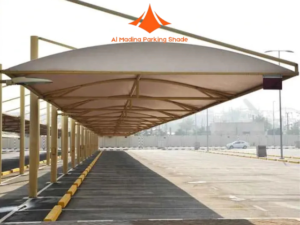
If you want to explore more about the advantages, installation, and pricing of PVC vs HDPE parking shades, check out our comprehensive resources at Al Madina Parking Shade.
Aesthetic Appeal and Design Options: PVC vs HDPE Parking Shades for Car
Color Choices and Style Variations in PVC vs HDPE Parking Shades
The look of your PVC vs HDPE parking shades matters just as much as their function. It’s a visible structure, and you want it to blend well with your property or business premises. In this arena, both PVC and HDPE offer diverse aesthetic options, but they differ in style and finish.
PVC shades generally offer a sleek, polished appearance. Their glossy, opaque finish makes them look modern and premium. You’ll often find PVC shades in solid colors like white, beige, grey, or even metallic tones. Some higher-end PVC fabrics come with printed patterns or branding, ideal for commercial spaces looking to stand out.
HDPE shades, in contrast, have a more relaxed, fabric-like texture. The open-weave material gives off a softer, more natural look. HDPE is commonly available in earthy tones such as green, brown, and tan, though bolder options like blue, red, or yellow are also available. The semi-translucent nature of HDPE allows light to filter through, giving it a less imposing feel.
Integration with Property Architecture in PVC vs HDPE Parking Shades
Design-wise, PVC is ideal for settings that demand a clean, uniform structure. It’s popular in corporate buildings, airports, luxury apartments, and other environments where a modern appearance is prioritized. Its rigid nature allows for crisp edges and bold geometric designs, adding to its aesthetic value.
HDPE shades, on the other hand, excel in residential and natural environments. Because they’re more flexible, they work well with curved or free-form designs. Architects and designers often choose HDPE for gardens, playgrounds, and eco-friendly complexes. The breathable fabric blends well with nature and can be styled into overlapping sails or draped structures for a unique look.
When deciding based on appearance, consider the overall vibe of your location. Want something glossy and bold? Go with PVC. Prefer a relaxed, natural, and breezy aesthetic? HDPE is your match.
Environmental Impact: PVC vs HDPE Parking Shades Sustainability
Recyclability and Eco-Friendliness in PVC vs HDPE Parking Shades
In today’s eco-conscious world, sustainability plays a big role in material selection. HDPE clearly stands out here. Most HDPE used in PVC vs HDPE parking shades is recyclable and often made from post-consumer materials like milk jugs or shampoo bottles. It has a lower environmental impact both in production and disposal.
Additionally, HDPE’s breathability reduces the need for active cooling (like fans or air conditioners) underneath the shaded area, thereby contributing to energy savings over time.
PVC, unfortunately, has a less favorable reputation environmentally. The production of PVC releases toxic chlorine-based chemicals, which can be harmful to both the environment and human health if not managed properly. It is also more difficult to recycle and often ends up in landfills.
Sustainability in Manufacturing for PVC vs HDPE Parking Shades
The manufacturing processes for these materials also differ in terms of their carbon footprint. HDPE requires less energy to produce, and its reuse potential contributes to a circular economy. The lighter weight of HDPE also means lower shipping emissions compared to PVC, which is bulkier and heavier.
On the other hand, PVC manufacturing is resource-intensive. While some eco-friendly variants and companies are working toward greener PVC, the material as a whole is still seen as less sustainable. If you’re someone who places a high value on environmental impact, HDPE wins hands down in this category.
If you want to explore more about the advantages, installation, and pricing of PVC vs HDPE parking shades, check out our comprehensive resources at Al Madina Parking Shade.
Installation Process: PVC vs HDPE Parking Shades for Ease of Use
Ease of Installation for PVC
Installing PVC shades is not a DIY-friendly project. It involves precision, tools, and often professional installers. Because PVC is heavier and less flexible, it requires a more robust support structure—usually made of steel or reinforced aluminum. The tensioning process must be done carefully to avoid creases or air pockets, which can affect the appearance and performance.
The corners often need to be heat-welded or sealed, and incorrect handling can result in tears or deformation. While all this adds to the initial cost and time, it also ensures that your shade is built to last.
Professional installation is highly recommended, especially for large or commercial projects. Many suppliers include installation as part of the package, given the complexity.
Ease of Installation for HDPE
HDPE, by comparison, is lighter, more flexible, and far easier to install. It can often be handled without heavy machinery, which is ideal for small-scale residential projects. The fabric can be stretched over a variety of frame styles and doesn’t need intense precision to look good.
The weave of HDPE allows it to self-adjust to minor frame discrepancies, making it forgiving for uneven surfaces or older constructions. Fastening HDPE typically involves eyelets, tension cables, and manual tools, making it significantly less labor-intensive.
For homeowners or small businesses, HDPE offers a faster turnaround and less disruption during installation. That alone can be a deciding factor, especially for projects on a tight schedule or budget.
Maintenance Requirements: Cleaning, Upkeep, and Repairs
Cleaning and Upkeep Differences
Regular maintenance, including evaluating factors like HDPE vs PVC environmental impact and the HDPE vs PVC lifespan, is key to extending the life of your car parking shade, no matter the material. However, the type and frequency of maintenance, as well as longevity, differ significantly between PVC and HDPE.
PVC requires minimal cleaning, thanks to its smooth and non-porous surface. Dust and grime usually slide off or can be rinsed away with a garden hose. For stubborn spots, mild soap and a sponge will do the trick. Because PVC is water-resistant, you don’t need to worry about water stains or mold, unless there’s a tear in the fabric.
HDPE, being a woven mesh, tends to trap more dirt, pollen, and even insects. Regular dusting or power washing might be needed, especially in dry or windy regions. If left unchecked, the buildup can affect airflow and shade performance. Despite this, HDPE resists mold and mildew fairly well due to its breathability.
Repair and Replacement Considerations
In terms of repairs, HDPE is more forgiving. A minor tear or sag can often be fixed with a tensioning adjustment or a replacement section. PVC, on the other hand, is more delicate to repair. Tears often require professional resealing or replacement of entire panels, especially if the damage affects the integrity of the waterproof coating.
Over the long term, HDPE shades may need re-tensioning or realignment, especially if they’ve been exposed to strong winds. But replacement is less costly and easier compared to PVC. If your priority is easy upkeep and low-cost maintenance, HDPE is the winner here.
If you want to explore more about the advantages, installation, and pricing of PVC vs HDPE parking shades, check out our comprehensive resources at Al Madina Parking Shade.
Suitability Based on Climate and Application
Best Use Cases for PVC Parking Shades
PVC excels in climates where rainfall is heavy or consistent. If you’re located in a region that experiences tropical storms, monsoons, or unpredictable showers, a waterproof solution like PVC is a must. These shades ensure that vehicles remain dry and protected from the elements, which can significantly reduce rusting, paint fading, and interior mold due to dampness.
Additionally, humid environments benefit from PVC’s resistance to mold and mildew. Since the material does not absorb water, it won’t harbor moisture or bacteria, making it suitable for coastal areas or cities with high humidity.
Another great application for PVC is in prestigious commercial environments, such as corporate buildings, malls, hotels, or luxury residences in regions like Saudi Arabia. The material’s glossy and modern aesthetic fits well with high-end architectural styles, offering both function and form.
Ideal Climates for HDPE Parking Shades
HDPE is tailor-made for hot and dry climates, such as desert regions, where the primary concern is protection from intense sunlight and high temperatures, making it crucial to evaluate PVC vs HDPE Parking Shades for sun protection. Its breathable mesh allows air to circulate, significantly reducing heat buildup beneath the shade. This makes it perfect for places like Saudi Arabia, the Middle East, the southwestern U.S., or other arid environments.
The open-weave design also ensures that natural light filters through gently, creating a pleasant, diffused light underneath rather than harsh shadows. This contributes to comfort and visibility, particularly in public areas or spaces used during the daytime.
HDPE is also ideal for areas with frequent dust storms or dry winds. Though it collects dust, it’s easier to clean and doesn’t absorb moisture, so maintenance is manageable. For those looking for comfort, affordability, and a breathable structure in sun-drenched regions, HDPE is the way to go.
Safety, Strength, and Structural Integrity
Fire Resistance and Heat Tolerance
Safety should always be a top priority, especially for public or high-traffic installations. PVC vs HDPE Parking Shades have different reactions to heat and fire, which could influence your decision depending on local regulations or personal preferences.
PVC is inherently flame-resistant, meaning it doesn’t ignite easily and is self-extinguishing once the heat source is removed, similar to PTFE which is known for its high heat resistance. This makes it ideal for environments with strict fire safety codes or where external heat sources might be present, such as near kitchens, industrial areas, or electrical units.
HDPE, while treated with UV stabilizers, is generally less fire-resistant, but its longevity remains impressive with a lifespan up to 12 years. It can melt or deform under extremely high temperatures and is more flammable if not treated with fire retardants. That said, many modern HDPE fabrics are now manufactured with fire-resistant coatings to meet safety standards.
Impact Resistance and Structural Integrity
Both materials are durable, but they respond differently to physical impacts. PVC is rigid and strong, capable of resisting punctures from falling branches or flying debris. Its layered construction gives it added durability against tears.
HDPE is more flexible, which makes it better at withstanding strong winds or minor impacts. It can stretch slightly without tearing, which is particularly useful in wind-prone or seismic regions. However, if struck with sharp objects, it might fray or rip more easily than PVC.
Ultimately, PVC offers better fire safety, while HDPE, renowned for its benefits in flexibility and breathability, brings more adaptability under physical stress, considering PVC vs HDPE Parking Shades for outdoor use disadvantages also depends on what kind of threats are more likely in your area.
Real-World Applications and Case Studies
Residential Installations
In private homes and apartment complexes, HDPE is often the shade of choice due to its affordability, natural look, and breathability; additionally, its shade factor makes it ideal for reducing heat while maintaining airflow. For example, a family living in Phoenix, Arizona, might choose HDPE shades to keep their driveway cool without sacrificing airflow. These shades are often installed using simple steel frames or cantilever designs, making them easy to integrate into landscaping.
In contrast, high-end villas or gated communities might prefer PVC shades for their elegance and robust structure. In countries like Saudi Arabia, a modern white PVC canopy installed in front of a luxury villa adds visual appeal while offering reliable rain protection.
If you want to explore more about the advantages, installation, and pricing of PVC vs HDPE parking shades, check out our comprehensive resources at Al Madina Parking Shade.
Commercial and Public Spaces
Shopping malls, schools, and government buildings, including those in Saudi Arabia, frequently opt for PVC structures because they offer complete weather protection. A commercial project in Singapore, for example, might use large PVC canopies in the parking lot to protect vehicles during torrential rains. The clean lines and uniform design also lend a professional appearance to the premises.
Meanwhile, HDPE is more common in schools, parks, and community centers, especially in outdoor playgrounds or shared parking areas. Its vibrant colors and soft texture make it child-friendly and visually engaging.
These real-world scenarios prove that both materials have valid, valuable roles depending on location, use, and audience.
Expert Recommendations: When to Choose PVC vs HDPE Parking Shades
Choose PVC when:
- You need waterproofing, durability, and a premium finish
- Appearance and fire safety are top priorities
- Your climate is wet, humid, or unpredictable
- The project is for high-end commercial or luxury environments
Choose HDPE when:
- You want breathability, easy installation, and cost savings
- Environmental sustainability and comfort are important
- Your climate is hot, dry, and sunny
- The project is for residential, public, or community spaces
Comparison Table: PVC vs HDPE Parking Shades
| Feature | PVC Membrane | HDPE Fabric |
|---|---|---|
| Best For | High-end, waterproof shades | Large, airy sun canopies |
| Appearance | Sleek, modern, vibrant | Soft, natural, muted |
| Installation Complexity | High | Low to moderate |
| Cleaning | Very easy | Needs deeper cleaning |
| Rain Protection | Total | Minimal |
| Airflow | Limited | Excellent |
| UV Block | Up to 99% | Up to 98% |
| Lifespan | 10–15 years | 8–12 years |
| Cost | Higher | Moderate |
| Maintenance | Low | Moderate |
| Environmental Impact | Higher | Lower |
| Fire Resistance | Excellent | Moderate (unless treated) |
| Strength | Rigid, puncture-resistant | Flexible, wind-resistant |
Conclusion: Which Is Better—HDPE or PVC for Parking Shades?
Both PVC vs HDPE Parking Shades have their strengths and limitations, with considerations of PVC vs HDPE Parking Shades’ lifespan and environmental impact playing a critical role in decision-making. The best choice depends on your climate, budget, maintenance preferences, and design goals. For top-tier weather protection and aesthetics, PVC is ideal. For hot, dry climates and eco-friendly, budget-conscious projects, HDPE is hard to beat.
The smartest move is to match your shade material to your climate, budget, and style preferences, considering factors like PVC vs HDPE Parking Shades for sun protection. With the right choice, you’ll protect your vehicle, elevate your property’s look, and enjoy long-term savings in maintenance and energy efficiency.
For more details and expert solutions on PVC vs HDPE parking shades, visit Al Madina Parking Shade.
FAQs: PVC vs HDPE Parking Shades
Which material lasts longer, PVC vs HDPE Parking Shades?
PVC can last 10–15 years; HDPE offers 8–12 years, depending on conditions.
Is one material better for extreme heat?
HDPE is better for hot climates due to its breathability.
Can these shades be customized?
Yes, both materials offer a range of colors, shapes, and designs.
Which is more eco-friendly?
HDPE is generally more sustainable and recyclable.
Do both materials offer UV protection?
Yes, both provide excellent UV protection—PVC up to 100%, HDPE up to 98%.
If you want to choose a design, we can create any design and for a sample design. Click here